
Pulp Hyperemia: When Tooth Sensitivity Means Something Different
Many people experience sensitive teeth from time to time. A sip of cold water, a sweet dessert, or even breathing in cold air can sometimes cause a quick, sharp sensation. But not all tooth sensitivity is the same.
One possible cause is pulp hyperemia, sometimes described as an early or reversible inflammation of the dental pulp.
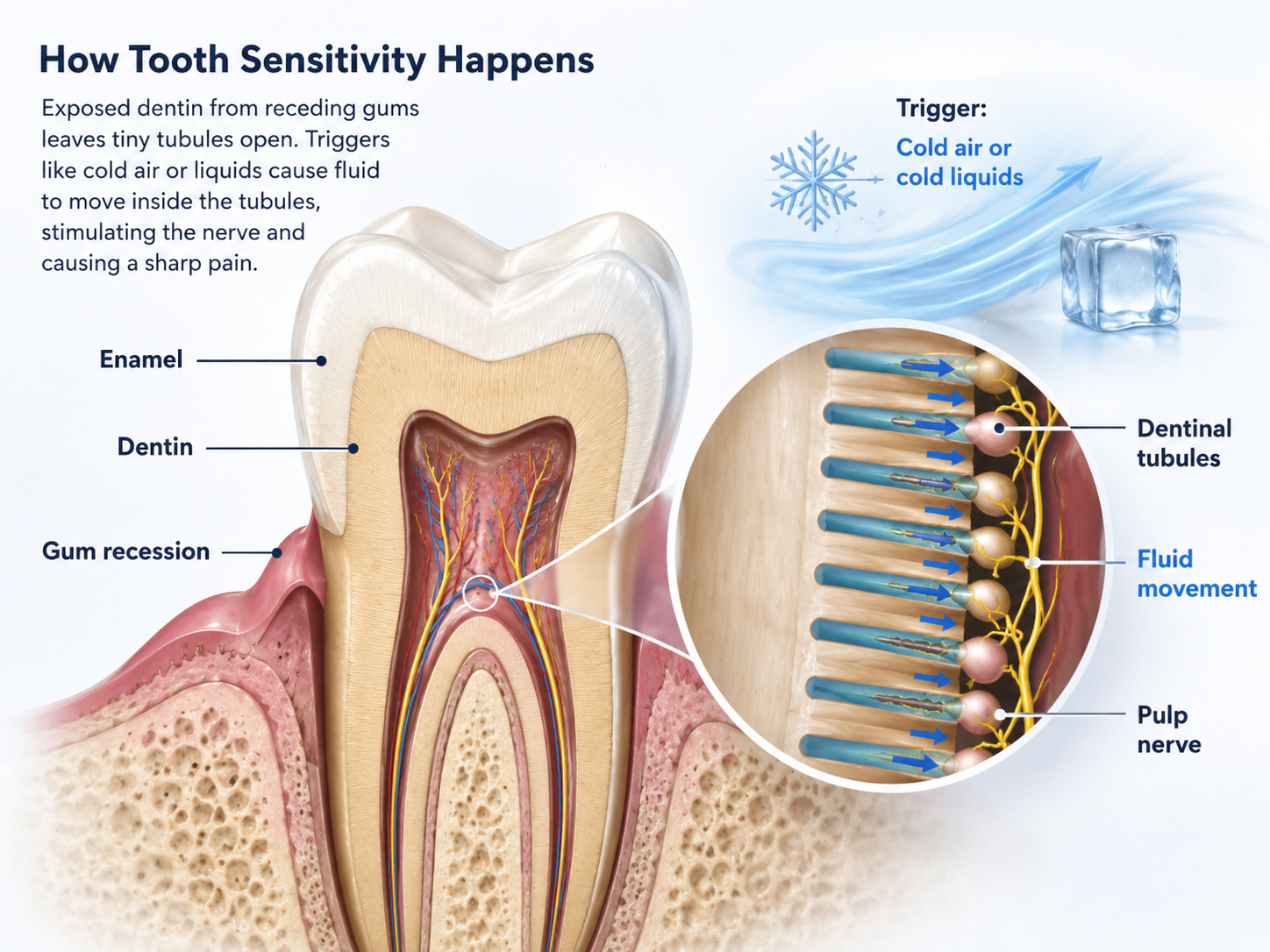
How tooth sensitivity happens
What Is Pulp Hyperemia?
Inside every tooth is a soft tissue called the pulp, which contains nerves and blood vessels. When the pulp becomes irritated, the tooth may become unusually sensitive.
This condition is often temporary and, when the source of irritation is identified and treated early, the pulp can usually recover.
Today, dentists commonly describe this condition as reversible pulpitis.
What Does It Feel Like?
The most common symptom is a sudden sensitivity to:
Cold drinks or foods
Sweet foods
Occasionally heat
Air directed at the tooth
One of the most important clues is how long the sensitivity lasts.
For example, you may take a sip of ice water and experience a sharp sensation in one tooth, but within a few seconds the tooth feels normal again.
This is different from a more seriously inflamed pulp, where discomfort may continue well after the cold or heat has been removed.
What Can Cause Pulp Hyperemia?
Several things can irritate the pulp, including:
Early tooth decay
A deep cavity
A recent filling or dental procedure
A leaking or deteriorating filling
A small crack in the tooth
Excessive biting pressure or tooth grinding
Exposed dentin
Trauma to the tooth
Finding the cause is important because simply treating the sensitivity without addressing the underlying problem may only provide temporary relief.
How We Treat Pulp Hyperemia at Morgan Heights Dental Centre
At Morgan Heights Dental Centre, our first goal is to determine why your tooth has become sensitive.
Not every sensitive tooth needs a filling, and a sensitive tooth certainly does not automatically mean that you need a root canal.
Step 1: Finding the Cause
We begin by carefully examining the sensitive tooth and comparing it with the surrounding teeth.
Depending on your symptoms, we may:
Test the tooth's response to cold
Check how long the sensitivity lasts
Examine the tooth for cavities
Look for cracks or damaged fillings
Check for exposed roots or worn enamel
Evaluate your bite
Check whether grinding or clenching may be contributing
Take digital X-rays when necessary
One of the most valuable pieces of information is not simply how strongly the tooth reacts, but how quickly it returns to normal.
A tooth that reacts sharply to cold but becomes comfortable within a few seconds often behaves very differently from a tooth where pain continues long after the cold is gone.
Step 2: Treating the Source of the Irritation
Once we identify the cause, treatment is designed specifically for that tooth.
For mild sensitivity or exposed dentin, treatment may involve protecting or sealing the sensitive area and recommending appropriate desensitizing products.
If decay is irritating the pulp, we can remove the decay and restore the tooth.
If an older filling is leaking, cracked, or no longer sealing the tooth properly, replacing the restoration may remove the source of irritation and allow the pulp to recover.
If the sensitivity is related to the bite, grinding, or excessive pressure on the tooth, we may address those factors rather than treating the pulp itself.
Step 3: Laser Treatment When Appropriate
Morgan Heights Dental Centre also has advanced dental laser technology.
For selected patients with tooth sensitivity, laser therapy may be considered as part of treatment. Depending on the cause and condition of the tooth, laser treatment may help reduce sensitivity by affecting the exposed dentinal tubules or the sensitivity response of the tooth.
Laser therapy is not automatically necessary for every sensitive tooth. We first identify the cause and then determine whether laser treatment is appropriate for your particular situation.
Step 4: Protecting and Restoring the Tooth
Sometimes sensitivity is a sign that a tooth has lost a significant amount of its protective structure.
If the tooth requires more extensive restoration, we can evaluate whether a filling, onlay, or crown is the most appropriate way to protect it.
At Morgan Heights Dental Centre, we also use digital dentistry and CEREC technology when appropriate, allowing us to digitally scan, design, and fabricate many ceramic restorations in our office.
The goal is not simply to stop the sensitivity. We want to restore the tooth so it can remain comfortable, functional, and protected over the long term.
Can We Avoid a Root Canal?
In many cases of reversible pulpal inflammation, yes.
If the pulp is still healthy enough to recover and the source of irritation is removed early, the tooth may settle down without root canal treatment.
This is one reason we recommend having a tooth evaluated when its sensitivity suddenly changes rather than waiting for it to become painful.
However, if the inflammation has progressed and the pulp can no longer recover, root canal treatment may become necessary.
When Should You Be More Concerned?
Contact your dentist if you notice:
Pain that continues after cold or heat is removed
Toothache that starts without eating or drinking
Pain that wakes you at night
Increasing or throbbing pain
Pain when biting or chewing
Swelling around the tooth or gums
Sensitivity that is becoming progressively worse
These symptoms do not automatically mean that you need a root canal, but they are good reasons to have the tooth examined.
Sensitive Tooth? Early Diagnosis Can Make a Difference
If one tooth suddenly feels much more sensitive than the others, don't ignore the change.
At Morgan Heights Dental Centre, we focus on identifying the reason for your sensitivity before recommending treatment. Depending on the cause, treatment may be as simple as protecting an exposed area, repairing a filling, treating decay, adjusting the bite, or using laser therapy when appropriate.
When pulpal irritation is detected early, removing the cause may allow the tooth to recover and can sometimes prevent the need for more extensive treatment.
Does one tooth suddenly feel more sensitive than the others?
Book your appointment with Morgan Heights Dental Centre today so we can find the cause and help protect your tooth.
