
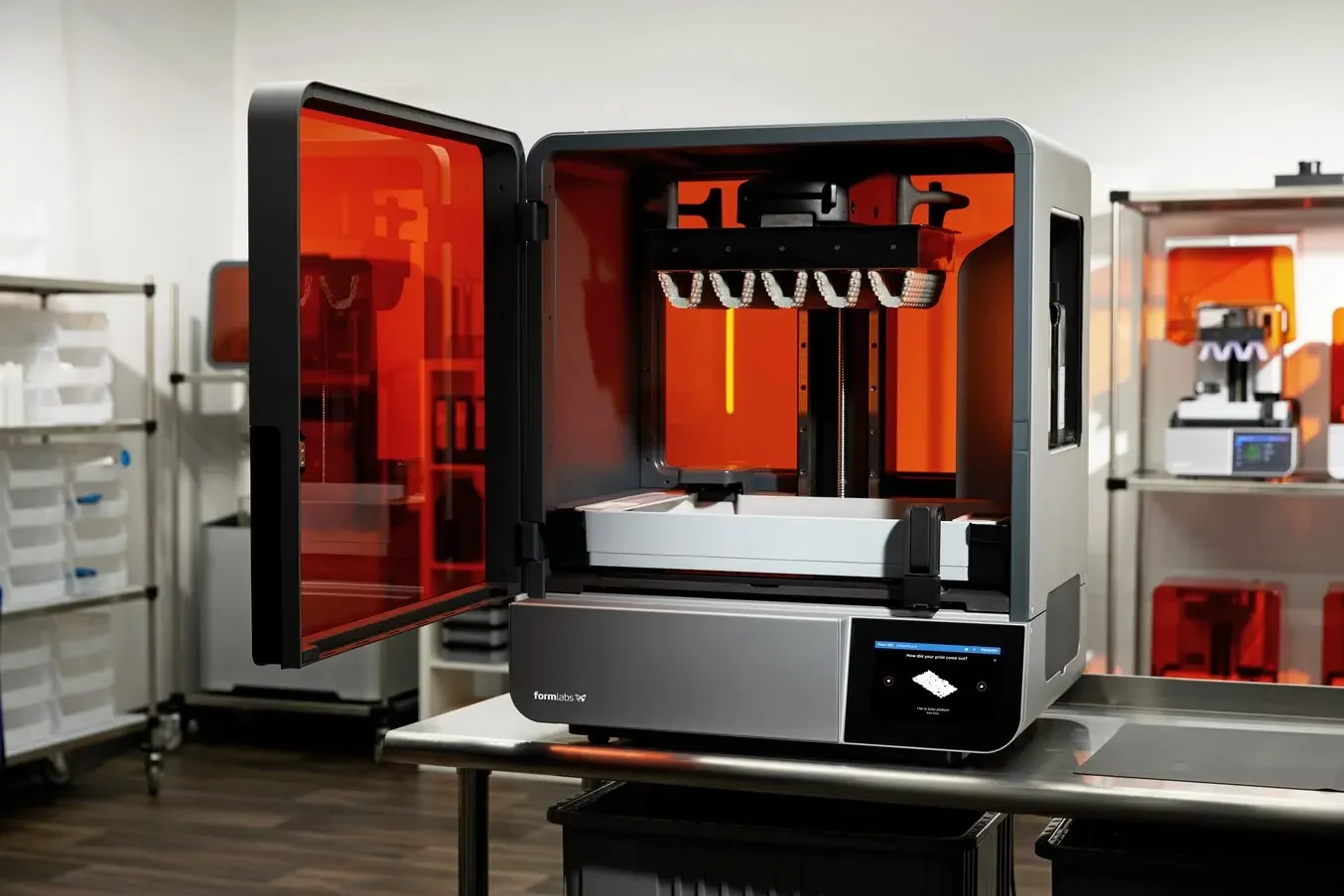
Faster, More Precise Dentistry with 3D Printing
Discover how Morgan Heights Dental Centre uses Formlabs dental 3D printing for digital models, night guards, implant surgical guides, flippers and immediate dentures.
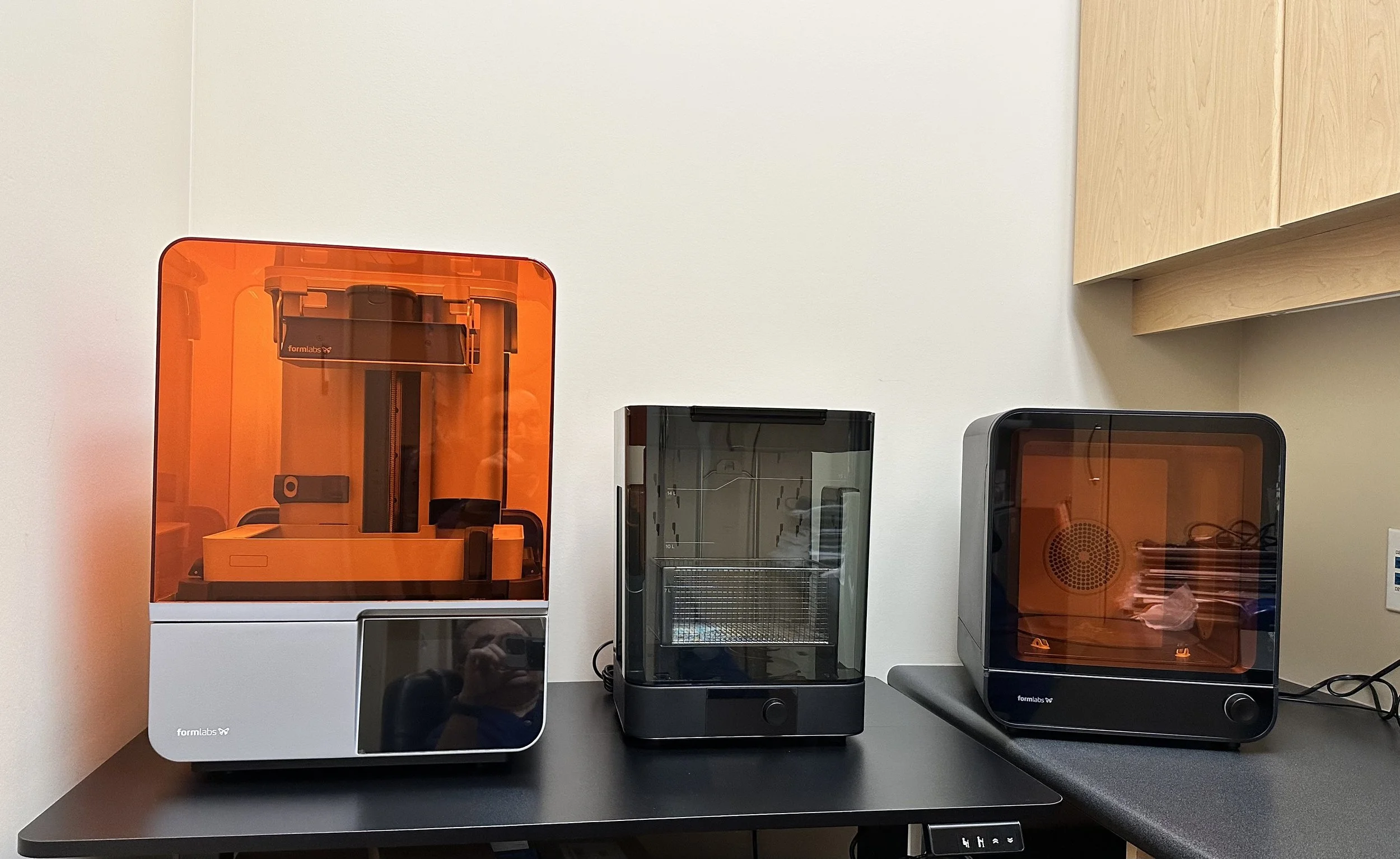
Our goal is to use digital technology where it can make treatment more efficient, predictable and convenient for our patients. After your teeth and oral structures have been digitally recorded, the information can be used to design a patient-specific model or appliance. Our 3D printers then allow us to manufacture several of these items within our digital dental workflow rather than depending entirely on traditional fabrication methods.
Modern dentistry,
powered by
Modern Technology.
What Is 3D Printing in Dentistry?
Modern dentistry is becoming increasingly digital. Instead of relying entirely on physical impressions, stone models and traditional laboratory fabrication, many dental treatments can now begin with a digital scan and move through computer-based design to highly accurate manufacturing. Dental 3D printing turns a digital design into a physical object by building it in extremely thin layers. Depending on the application and material, 3D printers can be used to produce dental models, night guards, surgical guides, dentures and other patient-specific appliances. For patients, the important advantage is not simply the printer itself. It is the digital workflow surrounding it. Digital information can move directly from scanning and treatment planning to fabrication, helping reduce some of the transportation, laboratory and manufacturing steps traditionally required. At Morgan Heights Dental Centre, we use Formlabs dental 3D printing technology as part of this digital workflow.
Accurate Digital Dental Models
For many years, dentists created models of a patient's teeth by taking a physical impression, pouring dental stone into it and waiting for the model to set. Digital dentistry gives us another option. A digital scan can be converted into an accurate three-dimensional dental model and printed using our Formlabs system. These models may be useful for treatment planning, evaluating the bite, appliance fabrication and communicating dental conditions or proposed treatment. Formlabs specifically supports the production of diagnostic dental models directly from digital scan data. (Formlabs) For patients, this creates a more streamlined connection between digital scanning, planning and fabrication.
Faster Night Guards
Patients who clench or grind their teeth may benefit from a night guard, also called an occlusal guard or splint. Traditionally, making a night guard often involves taking an impression, creating a model and sending the case through several laboratory steps before the finished appliance returns to the dental office. With our digital workflow, we can capture the shape of the teeth digitally, design the appliance and use our Formlabs 3D printing system to manufacture suitable night guards more efficiently. Formlabs has developed dental materials specifically for 3D-printed occlusal splints and night guards, including options for more rigid or more flexible appliances. (Formlabs). This allows us to shorten the manufacturing process compared with our previous traditional workflow, while maintaining the ability to customize the appliance to the individual patient's teeth and bite.
3D-Printed Surgical Guides for Dental Implants
One of the most important uses of 3D printing at Morgan Heights Dental Centre is guided dental implant surgery.
Planning an implant involves more than deciding where a missing tooth should be replaced. The dentist must consider the available bone and surrounding anatomical structures and determine an appropriate implant position, angle and depth.
Three-dimensional imaging and digital implant-planning software can be used to virtually plan implant placement. Once the treatment plan has been established, a patient-specific surgical guide can be designed and printed on our Formlabs dental 3D printer.
The guide fits over the patient's teeth or supporting anatomy and helps transfer the digital plan to the mouth during surgery by directing the implant instruments according to the planned position.
Formlabs' Surgical Guide Resin is specifically designed for producing biocompatible, sterilizable dental implant surgical guides and drilling templates. (Formlabs)
For appropriate cases, this combination of 3D imaging, digital planning and a 3D-printed surgical guide can help the dentist carry out implant placement with greater control and precision.
Not every implant requires guided surgery. The technique selected depends on the patient's anatomy, bone availability, implant location and overall treatment plan.
Faster Flippers After Tooth Removal
A flipper is a small removable temporary partial denture that can replace one or more missing teeth, often while the mouth heals or while a longer-term treatment is being completed.
Digital design and 3D printing give us a faster way to work through certain temporary tooth-replacement cases.
Because the patient's dental information is stored digitally, we can use it to help design and manufacture temporary prosthetic solutions without relying on as many of the traditional model and laboratory steps.
This can be particularly helpful when replacing a visible tooth and minimizing the amount of time a patient spends without a temporary replacement.
The exact timing and type of temporary appliance depend on the patient's clinical situation.
Immediate Dentures with a Digital Workflow
An immediate denture is prepared before teeth are removed so that it can be inserted at or soon after the extraction appointment. This means a patient does not necessarily have to go through the initial healing period without teeth. Using digital records, denture-design software and our Formlabs 3D-printing workflow can make the fabrication process more efficient than traditional methods in suitable cases. Formlabs provides dedicated workflows and biocompatible materials for digital denture production. Because the mouth changes as extraction sites heal, immediate dentures commonly require adjustments and may later require relining or replacement. We explain these expectations before treatment and arrange follow-up appointments to monitor healing and fit.
Frequently Asked Questions
Is 3D printing the same as CEREC?
No. Both are forms of digital dentistry, but they manufacture objects differently. CEREC generally mills a dental restoration from a solid block, while a 3D printer builds an object layer by layer.
Are 3D-printed night guards custom-made?
Yes. The appliance is designed from the individual patient's dental information and bite rather than being a generic over-the-counter guard.
Why use a 3D-printed guide for an implant?
A surgical guide can help transfer a digitally planned implant position to the mouth, helping guide the planned location and angulation during surgery.
Can an immediate denture be ready when my teeth are removed?
In suitable cases, an immediate denture can be designed in advance so it can be inserted at or shortly after the extraction appointment. Whether this approach is appropriate depends on your examination and treatment plan.
Does every dental treatment need 3D printing?
No. We use digital printing when it provides a meaningful clinical or practical advantage. The best workflow depends on the individual treatment.
Digital Dentistry At Morgan Heights Dental Centre
Our 3D printers allow us to bring more of the digital dental workflow directly into our practice — from accurate dental models and customized night guards to implant surgical guides, temporary flippers and immediate dentures. If you are considering dental implants, a night guard, dentures or another treatment, contact our South Surrey dental office for an examination. We can explain whether digital scanning and 3D printing may be useful for your individual treatment.