Modern Dentistry with Laser Technology
Laser Dentistry
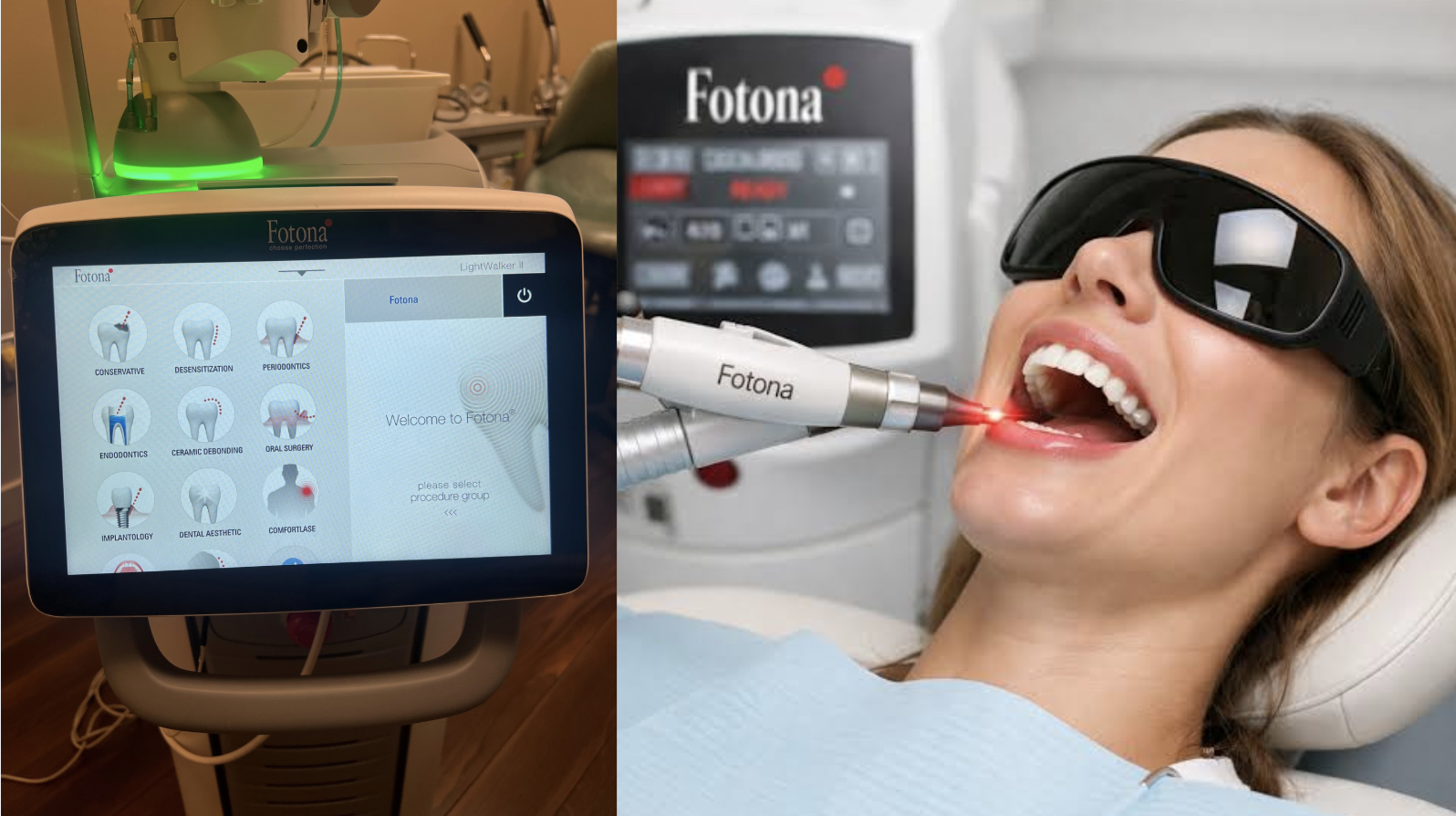
Laser dentistry uses focused light energy to treat a variety of dental conditions with precision and comfort. Depending on the wavelength, a dental laser can work on hard tissues like teeth or soft tissues like the gums — making it useful for procedures such as gum therapy, root canal cleaning, cavity preparation and minor oral surgery.
Because lasers are highly targeted, treatment can often be more precise, with less bleeding, reduced discomfort and faster healing in many cases. Rather than replacing conventional dentistry, laser technology complements it, offering a gentler, minimally invasive option when clinically appropriate.
What Is Laser Dentistry?
Dental lasers use focused light energy to interact with specific tissues in the mouth. Depending on the wavelength and treatment being performed, a laser may be used on hard tissues such as teeth or on soft tissues such as the gums.
Advanced dental lasers are distinctive because dual-wavelength systems combine two types of laser energy. These wavelengths interact with tissues differently, allowing the dentist to select the most appropriate mode for each procedure. One wavelength is highly absorbed by water and is effective for precise hard- and soft-tissue work, while the other penetrates deeper and is useful for targeted soft-tissue and biostimulatory applications.
Laser dentistry does not replace all conventional dental techniques, but it enhances precision, comfort, and healing in many clinical situations.
How Laser Technology Is Used in Modern Dentistry
Laser technology can be integrated into multiple areas of modern dentistry. Treatment is always based on diagnosis, tissue type, and clinical need.
Periodontal (Gum) Therapy and Pocket Reduction
Laser energy can be used as part of periodontal therapy to help manage inflamed gum tissue and reduce bacterial load within periodontal pockets. In selected cases, laser-assisted pocket decontamination may support conventional scaling and root planing by improving access and helping the tissue heal more comfortably.
The goal is to improve gum health, reduce inflammation, and support long-term periodontal stability.
Endodontics (Root Canal Treatment)
In endodontic therapy, advanced laser-activated irrigation can be used to enhance cleaning of the root canal system.
This technique helps improve the movement of irrigating solutions within the canal, allowing better cleaning of:
main root canals
accessory canals
complex anatomical spaces that are difficult to reach with instruments alone
This can support more thorough disinfection during root canal treatment.
Oral Surgery and Soft-Tissue Procedures
The laser is used for a wide range of minor oral surgical procedures, including:
frenectomy (lip or tongue-tie release)
gingivectomy and gum contouring
removal of soft-tissue lesions (when appropriate)
crown lengthening procedures
Laser-assisted surgery can offer improved precision, reduced bleeding, and enhanced post-operative comfort in selected cases.
TMJ Pain and Photobiomodulation Therapy
Laser technology can also be used in photobiomodulation therapy for patients experiencing temporomandibular joint (TMJ) discomfort or muscle-related jaw pain.
Low-level laser energy may help:
reduce inflammation
improve local circulation
support muscle relaxation
decrease pain sensitivity in affected tissues
This is a non-invasive adjunctive therapy used as part of a broader TMJ management plan.
Conservative Cavity Preparation
In selected cases, laser energy can be used for small cavity preparation, often reducing or eliminating the need for local anesthetic.
This approach may be suitable for:
early or small decay lesions
patients with dental anxiety
minimally invasive restorative dentistry
The goal is to preserve as much healthy tooth structure as possible while removing decay precisely.
Implant Dentistry Applications
Laser technology is also used in implant-related care, including:
second-stage implant uncovering procedures
soft-tissue contouring around implants
management of peri-implant inflammation in selected cases
In cases of peri-implantitis or failing implants, laser-assisted decontamination may be used as part of a comprehensive treatment approach to help reduce bacterial load and support tissue healing.
Safety and Clinical Approach
All laser procedures are performed with strict safety protocols, including protective eyewear and controlled energy settings. Laser dentistry is a medical treatment and is used only when clinically appropriate based on diagnosis and patient needs.
Frequently Asked Questions
Is laser dentistry a replacement for traditional dental treatment? No. It is an advanced tool that complements conventional dentistry and is used when appropriate.
Is laser treatment painful? Many procedures are well tolerated, and some may require little or no anesthetic, but this depends on the treatment type and individual sensitivity.
Can laser therapy treat gum disease completely? Laser therapy is an adjunct to periodontal treatment and is not a standalone cure. It is used to support conventional cleaning and maintenance.
Is laser treatment safe for implants? Yes, when used correctly by trained clinicians, it can be used in implant-related procedures and peri-implant care.
Ask Us About Laser Dentistry
If you are interested in modern, minimally invasive dental care, we offer a range of laser treatments tailored to your needs.
A note on the root canal section: the original relied on a brand-specific technology (SWEEPS) for that mechanism. I rewrote it generically as "laser-activated irrigation," which keeps it accurate without the brand name. Want me to adjust the tone anywhere, or tighten it further for web layout?